The scope is written before the code
Process mapping comes first, and the proposal lists what is in, what is out and what each stage delivers. Projects fail in this step far more often than in development.

An engineering-led digital studio — software, web and growth

What we do
When off-the-shelf tools force your team into workarounds, custom software removes them. We build business applications and SaaS products around your processes, with the integrations that keep data in one place and routine work automated.
What you get: You end up with one system your team actually uses: the manual steps automated, the data in one place, and a build you own and can extend.
Core capabilities
Purpose-built software and SaaS products designed around your workflows, users and data.
Requirements and process mapping
System architecture and database design
Multi-user SaaS accounts and subscriptions
REST API design and third-party integrations
Role-based access, dashboards and reporting
Deployment, documentation and handover
Use cases
Custom software is rarely a whole company system. More often it is the one part of the business nobody sells software for.
Why VLEONS
Process mapping comes first, and the proposal lists what is in, what is out and what each stage delivers. Projects fail in this step far more often than in development.
Entities, relationships and permissions are designed up front, because that is what makes module five cheap instead of a rewrite of module one.
Accounting, payment, logistics or messaging systems are connected during the project, not bolted on by a plugin afterwards.
Source code, database and deployment are handed over. You can extend it with us, with your own developers, or with someone else entirely.
Relevant work
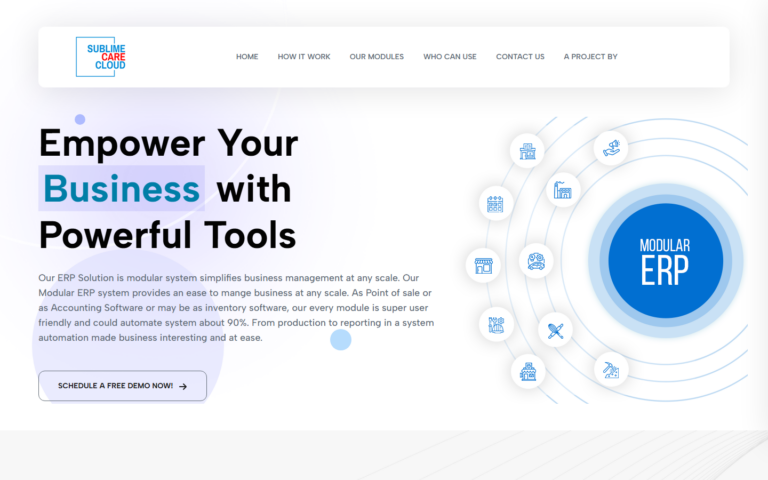
Why it is relevant hereSublime Care Cloud is the clearest example of this approach: modules defined as data, so the platform keeps growing without a rewrite.
How we work
We sit with the people who do the work, follow a record end to end and write down the exceptions nobody mentions in the first meeting.
Entities, roles, approvals and reporting needs are designed before any screen, so the structure holds as the system grows.
The first release covers the workflow that pays for itself. You use it while the next module is built, which is also how requirements get corrected early.
Legacy data is cleaned and mapped, staff are shown the system, and you receive the source, documentation and accounts.
Questions
When the workflow you want to keep is the one no product supports, when several systems hold the same record and disagree, or when the licence cost of an off-the-shelf tool grows faster than the business does. If your process is standard, buying is usually cheaper and we will say so.
Yes, and that is most of the work. The custom part usually sits in the middle and talks to the accounting package, the payment provider and the tools your staff already know, through their APIs. See web application development if the result is mainly a browser-based tool.
From scope, not from a category. The number moves with how many user roles exist, how many systems have to be integrated, how much legacy data needs cleaning, and how strict the audit requirements are. You get one fixed price in writing, 50% to start and 50% before deployment.
It is exported, cleaned and mapped into the new model before go-live, with a dry run first so you can check the numbers. Migration is quoted as its own stage because it is frequently larger than the feature that uses the data.
We do, unless you would rather not. Budget a modest percentage of the build cost each year for dependency and security updates, small changes and the occasional new module. Everything is documented so an in-house developer can take over.
Send us the workflow that is costing your team hours. You get a written scope with a fixed price before anything is built.
Discuss your projectStart a project
Share a few details about your business and what you need. We’ll reply with questions or a proposal.