Modules configured, not hard-coded
We build the module definitions as data, so a new area of the business is a configuration job rather than another hand-built screen to maintain forever.

An engineering-led digital studio — software, web and growth

What we do
ERP and CRM systems work best when they fit the business. We design and build systems for managing operations, inventory, sales, customers and reporting, so decisions come from live data instead of scattered files.
What you get: You end up with operations, customers and reporting on one platform, so decisions come from live data instead of exported spreadsheets.
Core capabilities
Connected systems that bring customer relationships, operations and business data into one place.
Module planning around your workflows
Customer, sales and pipeline management
Inventory, orders and operations modules
User roles, approvals and audit trails
Reports and management dashboards
Training, deployment and long-term support
Modules
Nobody needs "an ERP". They need these, in the order the business feels the pain.
Why VLEONS
We build the module definitions as data, so a new area of the business is a configuration job rather than another hand-built screen to maintain forever.
Who can see a price, who can approve a discount, who changed a stock figure at 2am: access and history are part of the data model, not an afterthought.
Dashboards read the same records your staff work in, which is the only way management numbers and operational numbers ever agree.
Sales before stock, or stock before purchasing — whichever order keeps the business running while people learn the system.
Relevant work
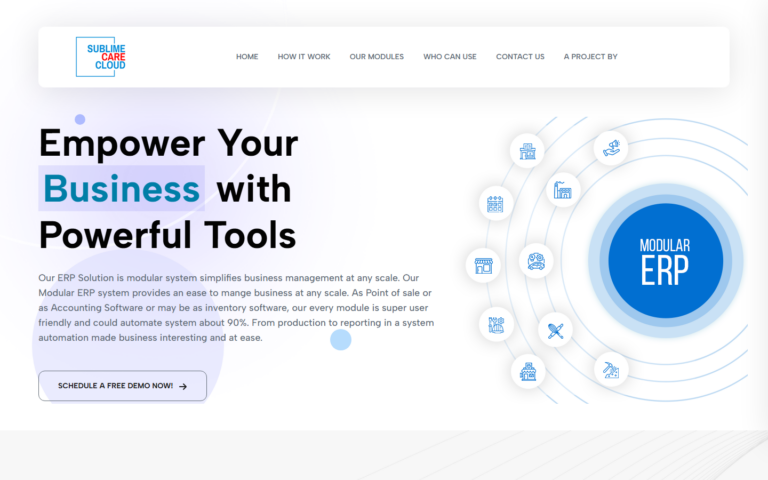
Why it is relevant hereSublime Care Cloud runs operations, customers and reporting on one platform, with modules that register themselves as the business adds them.
How we work
We follow an order, a customer and a stock item through the business today, including the WhatsApp messages and manual notes that hold it together.
Which modules exist, what each role may do, what has to be approved, and which reports management actually reads.
One department goes live first with its real data, while the next module is being built. Corrections at this point are cheap.
Short sessions for each role, written notes for new staff, then support while the habits settle.
Questions
Extend it when the data model is sound and only the interface or a missing module is the problem. Replace it when the structure itself blocks what the business now does — and in that case the data moves across, not the old compromises.
The documents the business runs on: a sample invoice, a purchase order, a stock sheet, your price list, and an hour each with the people who use them. That is usually enough to map the operation.
They share one customer record. The CRM side tracks the pipeline and the conversations; the ERP side moves stock, orders and money. Separating them is what forces staff to type the same customer twice.
Not from us. The system is built for your business and you own it, so adding a user is an account, not another subscription. Hosting and any third-party services stay in your name.
Yes. It is a web platform, so branches and remote staff use the same system with the permissions their role allows, and reports cover whichever locations you choose.
Tell us how the business runs today. We map the operation first, then propose the modules in the order that pays back soonest.
Discuss your projectStart a project
Share a few details about your business and what you need. We’ll reply with questions or a proposal.